
Updated October 2026
Disclosure: Some links in this post are affiliate links. If you purchase through my link, I may earn a small commission at no extra cost to you. I only share products I genuinely use and recommend for my dogs and the families I work with.
Those little needle teeth! If your hands look like you lost a fight with a rose bush, you are not alone. Puppy biting is one of the questions I get most, and it usually comes with a worried “is this normal?” Yes. Puppies are very mouthy, and they do a lot of chewing and biting. Your puppy is not mean, and you are not doing it wrong. He is a baby learning about the world with his mouth. Here is how to stop puppy biting, kindly and one step at a time.
That said, what seems cute now can become a real problem later. As you parent your puppy, you are teaching him what is okay to chew and bite. It is never okay to bite or chew on people, or their shoes or clothing.
See how it’s done! This was day one with Dexter.
Why does my puppy bite so much?
Your puppy bites so much because biting is how puppies explore, play and soothe sore teeth, and because something in his day is often missing. Teething, curiosity, excitement, too little sleep, or not enough to do are the usual reasons. When a puppy’s needs aren’t being met, you’ll see more biting and jumping. When he is getting his energy out in healthy ways, the biting goes down.
Most puppies have a pattern too. Morning and evening are classic times for wild puppy zoomies, with grabbing pant legs and mouthing hands. If that’s your house, read Out of Control Puppies, Zoomies Explained. No, your puppy is not possessed!
Is my puppy biting because he is in pain?
Sometimes, so pay attention to when the biting happens. Teething can make a puppy’s mouth sore, and that’s one reason chewing feels so good. But if your puppy mostly bites when you touch a certain spot, pick him up, or handle his paws or ears, or if there’s a growl or a freeze before the bite, talk with your vet. A puppy who hurts somewhere will tell you with his teeth. It’s always worth ruling out.
How to stop puppy biting in the moment
You stop puppy biting by making sure his teeth always have something better to find, and by making the fun stop for just a moment when teeth land on skin. Here is what I do now in the moment.
- When your puppy bites, freeze. No talking, no yanking your hand away. Pulling away turns your hand into a fun tug toy.
- The moment he lets go, mark it with a soft “yes.”
- Right away, offer him a toy or chew, so the fun keeps going with his mouth in the right place.
- If he goes right back to your hands, quietly stand up and fold your arms. A mouthing puppy gets no attention for a few seconds.
- If he is really acting up, jumping and biting, step out of the room or over a baby gate for a short break. Wait a few seconds and come back. Repeat as needed.
I don’t recommend telling your puppy “no” or “no bite.” It might stop him for a second, but it doesn’t teach him what to do instead, and some puppies get more wound up and bite back, almost like they’re arguing. Never swat, scold or hold his mouth shut. We want him to trust your hands.
Does everyone in the family need to follow the same puppy rules?
Yes. Dogs don’t understand they can do something with one person but not with another. If one person plays rough and lets the puppy chew on their hands, everyone else’s work gets undone. I hate to be sexist, but the men in the family are typically the ones who start the rough, mouthy wrestling. It’s fun in the moment, but it is not the right way to play between a puppy and a human. Everyone teaches the same lesson. Teeth go on toys, never on people or their clothes.
What are the best chew toys for a biting puppy?
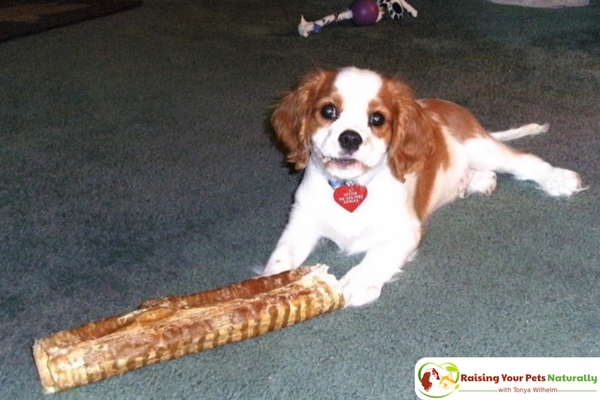
The best chew toys for a biting puppy are a good variety of soft toys and safe, edible chews, kept everywhere he spends time. Have at least 5 to 10 toys in each of the main rooms your puppy is in, so the right thing is always within reach.
Don’t use household items as toys. Your puppy may end up thinking your favorite shoes are his toys. Offer a mix of plush toys, fleece tug ropes, soft rubber toys, hollow food toys, and soft, fully edible chews like bully sticks, fish sticks or tripe sticks. I skip hard items like antlers or hard plastic bones, which can crack teeth.
Supervise your puppy with his toys. Puppies have different play and chew styles. If he breaks pieces off his toy and eats them, throw that toy away and try a new one or a new company. You don’t want to take the chance that a piece gets lodged in his intestine. Surgery is much more expensive than a new toy.
How do I get my puppy interested in his toys?
Make his toys more exciting than your fingers. If your puppy isn’t interested in his new chew toy or bone, try soaking it in chicken or beef broth, or smudge a little almond butter on it. A stuffed hollow toy is a great way to give his mouth a job.
Praise your puppy every time you notice him chewing his toys while he is still learning. You are teaching him that chewing the right things is a good thing. Once he has learned what is okay to chew, you only need to praise him once in a while.

Keep a toy in your hand when you play, too. A long tug toy keeps your fingers out of the game. When you open the crate or walk in the door, offer a toy right away and say “get your toy.” Now he has something to carry and something appropriate to bite.
How do I prevent puppy biting before it starts?
You prevent puppy biting by planning your puppy’s day so his needs are met before the biting starts. Prevention, prevention, prevention!
Anticipate the times your puppy tends to get mouthy. If you see a pattern, hand him the right toy before he grabs your hand, clothing or shoes. Keep play and excitement fairly low key. When a puppy gets too excited, the mouthy behavior usually goes up.
Give him interactive play with you, brain games and short training sessions throughout the day. If your puppy isn’t getting enough of this, he’ll find his own fun, usually with his teeth. Let him go on slow sniffy walks too. Sniffing tires a puppy out in a way chasing a ball can’t, and it helps him relax. I explain why in Sniffy Walks for Dogs.

A Name Game helps a lot. Say your puppy’s name once in a happy voice, and the moment he turns to look at you, reward him. Now you have a way to call his attention before he dives at your ankles. If you’d like a little help building better habits this week, try my free 5-Day Better Behavior Challenge.
For more on those specific targets, read How to Stop a Puppy from Biting Your Bathrobe or Pants and How to Train a Puppy Not to Bite the Leash.
Is my puppy biting because he is tired?
Very often, yes. An overtired puppy gets mouthy, just like an overtired toddler gets cranky. Puppies need a lot of sleep to grow and to make sense of everything they learned that day. If the biting seems to get worse the longer he’s been awake, it’s probably nap time.
Build in naps after chunks of activity, after a potty break, of course. A crate, dog bed or x pen in a quiet spot helps him wind down. You can read more about why rest matters so much in How Sleep Affects Dog Learning and Health.
When do puppies stop biting?
Most puppies bite much less by about a year old, though some mouthiness can hang on through adolescence, until around two years. Puppy teeth fall out around four to six months, and the adult teeth take time to settle in.
The biting phase can drag on when a puppy doesn’t have enough structure, play, rest and chewing outlets. When his daily needs are met and everyone in the family is guiding him the same kind way, things improve.
If you’d like a fun way to keep working on it, the free 5-Day Better Behavior Challenge is a nice place to start.
Puppy biting is normal and it does pass, even on the days it feels like it never will. Enjoy that sweet puppy breath while you have it. It goes way too fast.

Does your puppy still have puppy breath? Tell me in the comments.
 |  |


